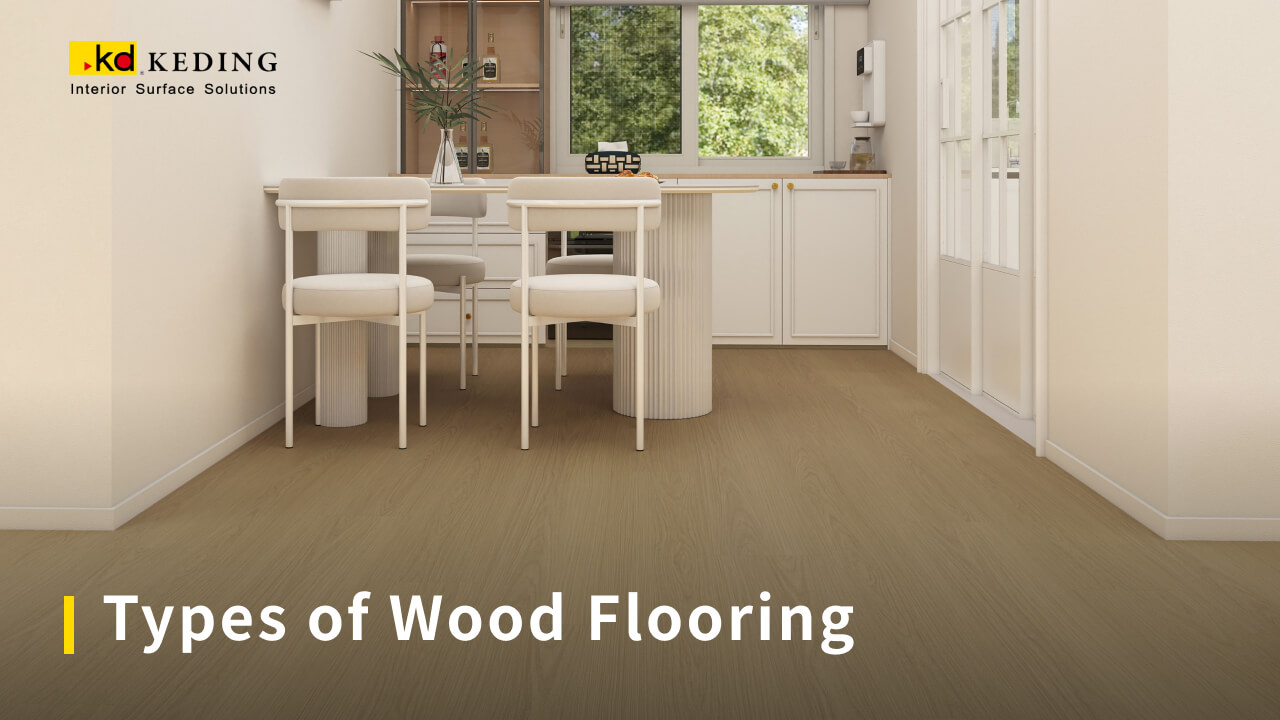
Wood floorings are loved for their warm texture, natural grain patterns, and the fact that they never feel cold underfoot like tiles do. This is exactly why they work so well across many interior styles, from modern apartments to cozy family homes. Today, the types of wood flooring available on the market are more diverse than ever.
Each option affects structural stability, moisture resistance, and long-term durability. In this article, we will walk you through the most common wood flooring types, including solid wood flooring, engineered wood flooring, laminate flooring, and more, so you can clearly understand how they differ and which one may suit your space best. Let’s go!
Different Types of Wood Flooring
Solid Wood Flooring
Solid wood flooring is the earliest and most traditional option among wood floors. Each plank is made from a single piece of natural wood, then sawn, tenoned, polished, and varnished before installation. For many years, this type of flooring was seen as the gold standard. But time has revealed its limits.
Solid wood flooring is highly sensitive to moisture. It can bulge, warp, or crack as humidity changes. This greatly restricts the wood species that can be used. Expansion joints are also required to allow the floor to breathe. Over time, these gaps easily trap dust and debris, making cleaning more difficult. On top of that, solid wood floors are expensive and consume more natural timber, which raises sustainability concerns.
The older generation often favors solid wood flooring. Many believe it can be sanded and refinished repeatedly, then passed down through generations. In reality, modern solid wood floors are finished with UV varnish at the factory. This hard coating cannot be reapplied at home because it requires industrial UV light to cure. In humid climates like Taiwan, solid wood flooring is even riskier. Once the floor swells and deforms, it cannot recover and usually has to be removed and replaced.
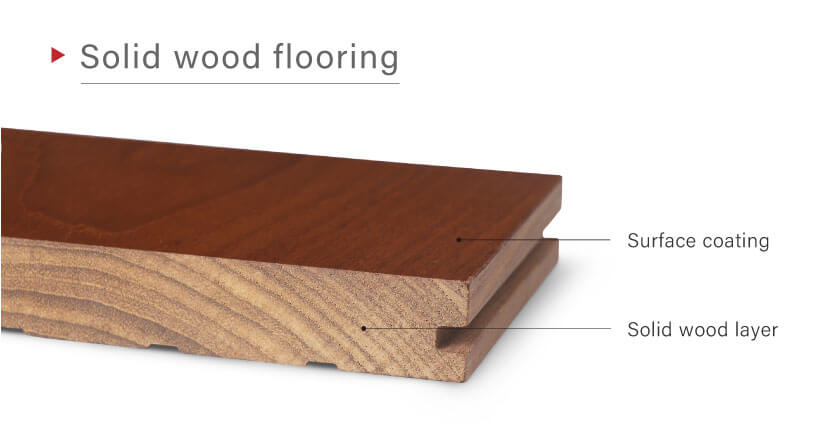
Sectional drawing of solid wood flooring(Image source/KEDING)
Engineered Wood Flooring
Engineered flooring is a type of wood flooring developed with island and humid environments in mind. It keeps the warm look and feel of solid wood, but avoids many of its structural problems. Thanks to its layered construction, engineered flooring can handle thermal expansion and contraction without needing expansion joints. That alone makes daily maintenance much easier.
The surface layer is real solid wood, carefully split from natural timber and bonded to a stable plywood base using advanced gluing technology. This structure greatly improves moisture resistance. In humid regions, engineered flooring does not bulge or swell easily, making it far more reliable than solid wood. At the same time, the natural grain, texture, and character of real wood are fully preserved on the surface.
Installation quality is also comparable to solid wood flooring. Because of this balance between beauty and performance, engineered flooring has steadily moved into the mainstream and become a preferred choice for modern home interiors. In places like Taiwan, it offers the warmth of solid wood while solving long-term issues caused by heat and humidity, all while using wood resources more efficiently.
►Engineered flooring selection full strategy
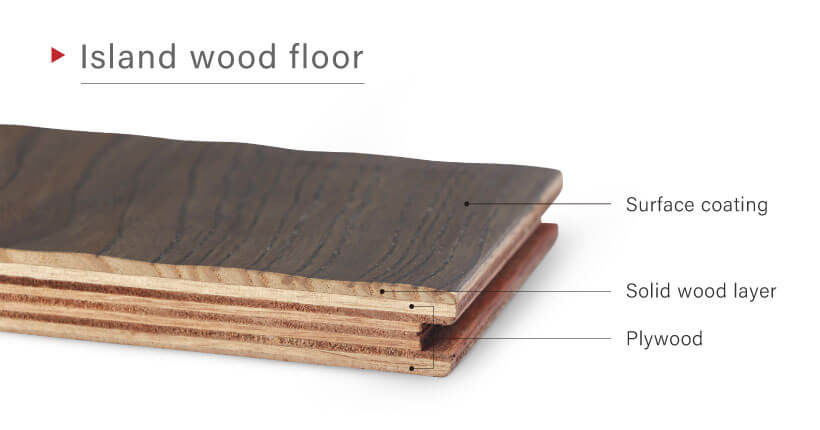
Sectional drawing of engineered flooring(Image source/KEDING)
Surface Structure of Engineered Flooring
The surface layer of engineered flooring is very different from that of traditional solid wood flooring. The way this solid wood layer is produced has a direct impact on durability, stability, and lifespan. There are two main methods used to create the surface layer: slicing and sawing.
Slicing involves soaking and heating the wood in water to soften it before cutting it into thin layers. This method offers high material efficiency and lower production costs. However, the heating process loosens the wood’s internal structure at a molecular level. Over time, this can make the surface coating more prone to cracking. The typical thickness ranges from 0.2 to 2 millimeters, commonly referred to as “flakes.”
Sawing cuts the wood directly with a saw blade, without boiling or heating it first. This preserves the natural density and strength of the wood fibers. While this method produces more waste and costs more than slicing, the result is a much stronger and more stable surface layer. The molecular structure remains intact, which leads to a longer lifespan. The usual thickness ranges from 2 to 5 millimeters, often called “thick sheets.”
Parquet Flooring
Parquet flooring is a classic type of wood flooring known for its decorative patterns rather than long, straight planks. Instead of using wide boards, parquet is made from small pieces of solid or engineered wood arranged into geometric designs. This gives the floor a strong visual identity and instantly adds character to a space.
Historically, parquet flooring dates back to 17th-century Europe and was widely used in palaces and aristocratic homes. Today, it has returned as a design-forward option for modern interiors that want warmth with personality. Parquet flooring can be produced using solid wood or engineered wood, with oak being the most common choice due to its stability and durability.
Patterns such as herringbone, chevron, basket weave, and Versailles create movement and depth on the floor. This makes parquet especially popular in living rooms, dining areas, and boutique commercial spaces where design impact matters. Despite its artistic look, parquet flooring still delivers the same warmth and comfort underfoot as other wood flooring types.
However, parquet flooring requires careful installation and proper subfloor preparation. Because it uses smaller wood pieces and patterned layouts, installation costs are usually higher than standard plank flooring. Like other real wood floors, parquet is also sensitive to moisture, so it is better suited for dry indoor areas rather than bathrooms or spaces with high humidity unless engineered parquet is used.
Laminate Flooring
Laminate flooring, strictly speaking, is not real hardwood flooring. Its surface is made from a plastic layer that is digitally printed to imitate wood grain and texture, rather than using natural wood. Beneath that surface sits a dense fiberboard core (MDF), which is produced from compressed recycled wood powder.
This construction makes laminate flooring one of the most affordable types on the market. It is also relatively scratch-resistant, which appeals to budget-conscious homeowners. However, the visual and tactile experience is less realistic when compared to engineered wood flooring.
The biggest concern lies in its core material, as it often absorbs moisture easily. Once water seeps in, the board can swell, lose structural integrity, and cause the floor to sink or deform. Because of this weakness, laminate flooring generally has a shorter lifespan, especially in humid environments.
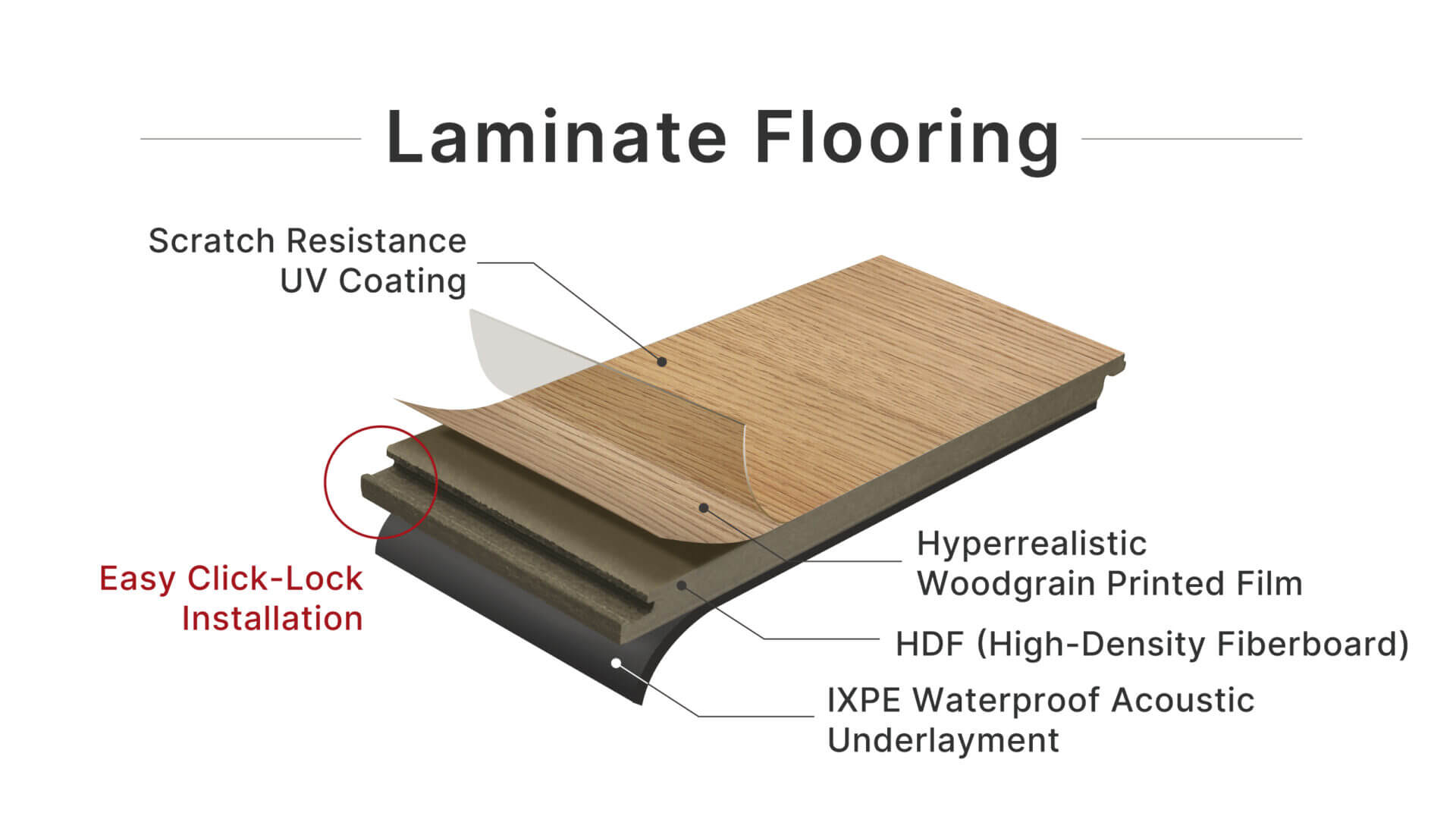
Sectional drawing of laminate flooring(Image source/KEDING)
Vinyl Flooring (PVC Flooring)
Vinyl flooring is a synthetic flooring material designed to mimic the look of wood while offering excellent practicality. Its surface uses high-resolution printing technology to recreate wood grain, color variation, and texture. Unlike real wood, vinyl flooring is made entirely from plastic-based materials, which makes it highly stable and easy to maintain.
One of vinyl flooring’s biggest advantages is its water resistance. It does not absorb moisture, making it suitable for kitchens, bathrooms, and other damp areas where wood flooring would struggle. Vinyl flooring is also comfortable underfoot, quieter than tile, and simple to clean. For busy households or commercial spaces, this low-maintenance nature is a major plus.
However, vinyl flooring does not offer the same natural depth or authenticity as real wood or engineered flooring. While modern designs look impressive, the texture and aging character of natural wood cannot be fully replicated. Vinyl flooring is best seen as a practical solution rather than a material chosen for heritage or long-term refinishing.
SPC Flooring
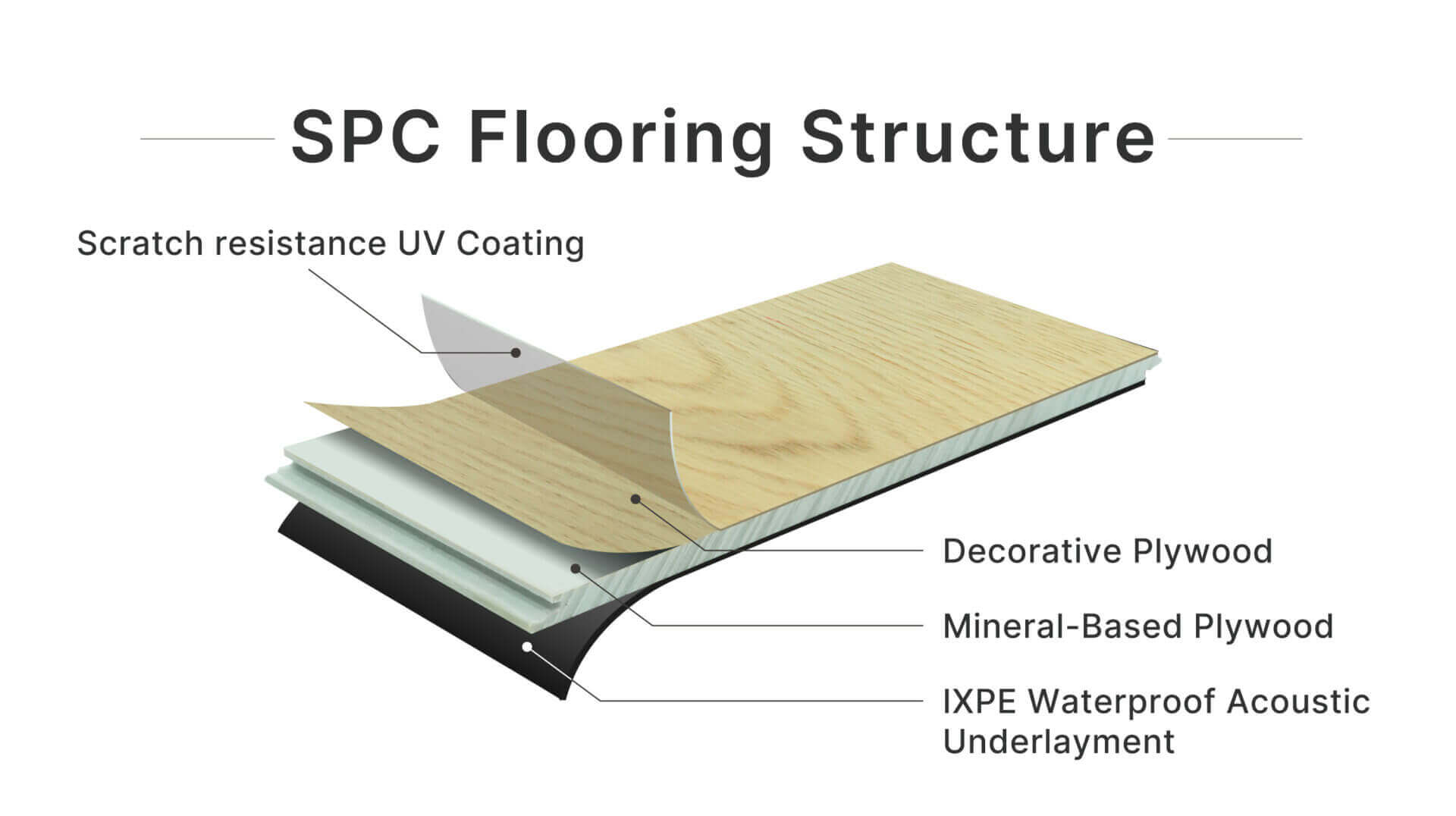
SPC flooring is a newer, upgraded category within vinyl flooring. SPC stands for Stone Plastic Composite, referring to its rigid core made from limestone powder and PVC. This structure gives SPC flooring exceptional dimensional stability and strength.
Compared to traditional vinyl flooring, SPC flooring is harder, denser, and more resistant to temperature changes. It does not expand or contract easily, making it suitable for large areas and island climates with fluctuating humidity and heat. Most SPC flooring features a click-lock installation system, which allows for fast and clean installation without glue.
SPC flooring is fully waterproof and highly resistant to dents and daily wear. This makes it popular for residential spaces, offices, and commercial interiors that require durability with a wood-like appearance. That said, because of its rigid core, SPC flooring feels firmer underfoot than wood or standard vinyl and does not provide the same warmth or acoustic softness as real wood flooring.
Different Wood Floors: Comparison
| Flooring Type | Materials | Structure | Pros | Cons | Common Uses |
| Solid Wood Flooring | Single piece of natural hardwood | One solid plank, no layers | Most natural look and feel, premium appearance | Sensitive to moisture, warping, and cracking, needs expansion joints, high cost | Luxury homes in dry, stable climates |
| Engineered Wood Flooring | Real wood veneer + plywood base | Multi-layer plywood with cross-grain structure | Real wood surface, high stability, moisture resistant, efficient use of wood | Higher cost than laminate or vinyl; veneer thickness varies | Homes and apartments in humid regions, ideal for Taiwan |
| Laminate Flooring | Printed plastic surface + MDF core | Wear layer + decorative film + MDF | Affordable, scratch-resistant, easy installation | Not real wood, poor moisture resistance, shorter lifespan | Dry indoor spaces, budget projects |
| Parquet Flooring | Solid or engineered wood blocks | Small wood pieces arranged in patterns | Decorative design, strong visual impact, real wood texture | Higher installation cost, moisture sensitive if solid wood | Living rooms, dining rooms, boutique interiors |
| Vinyl Flooring (PVC Flooring) | PVC-based synthetic materials | Multi-layer flexible plastic structure | Waterproof, easy to clean, quiet, and affordable | Artificial texture cannot be refinished | Kitchens, bathrooms, rentals, commercial spaces |
| SPC Flooring | Limestone powder + PVC | Rigid stone-plastic composite core | Fully waterproof, very stable, dent-resistant | Hard underfoot, lacks natural warmth | High-traffic areas, offices, humid environments |
Popular Kinds of Hardwood Flooring Species
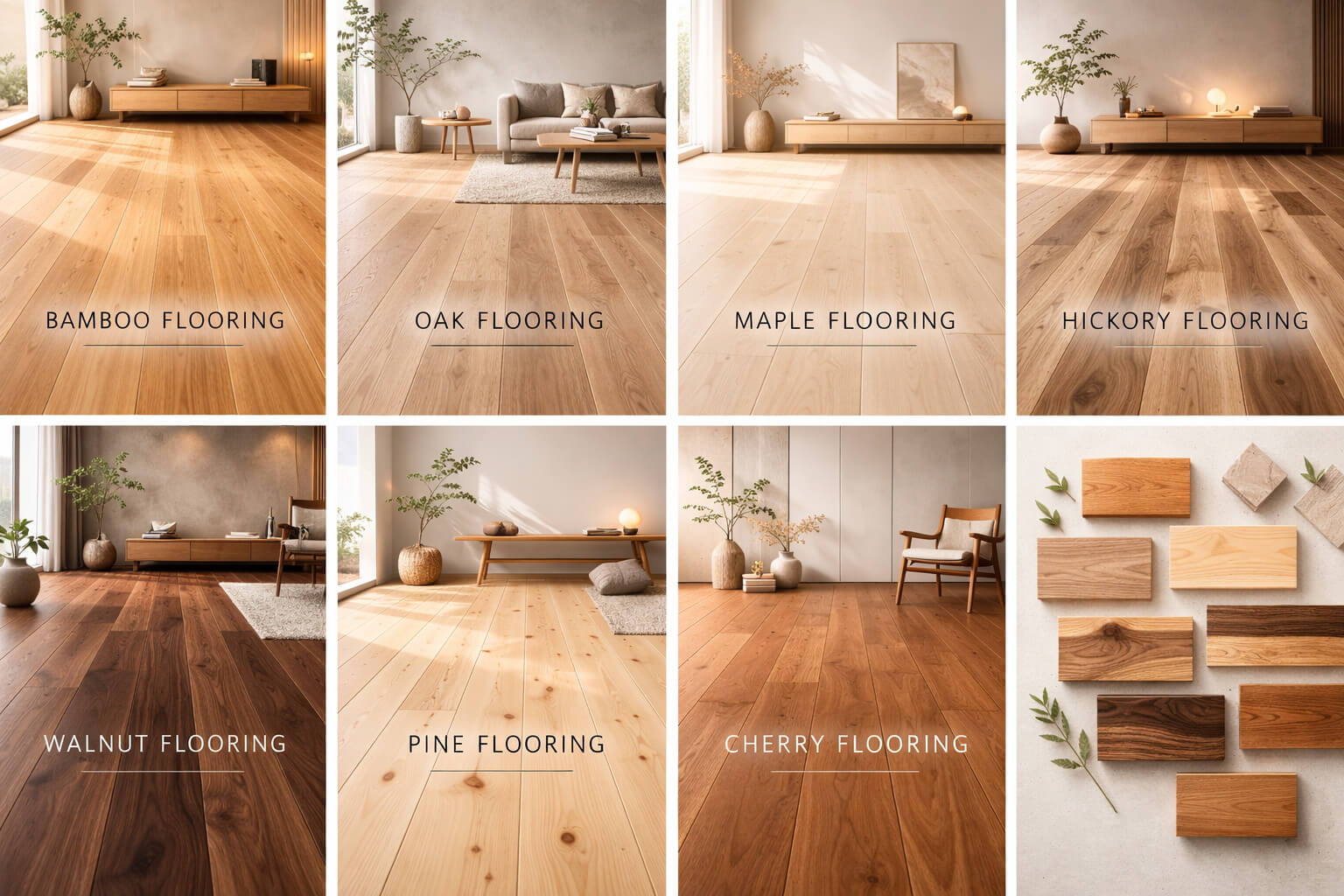
When choosing wood flooring, the structure and construction type are only part of the decision. Beyond the types of wood flooring, the wood grain and species you select play an equally important role. Below are some of the most popular hardwood flooring options used in interiors today:
- Bamboo: Bamboo is technically not wood, but it is widely used as a hardwood flooring alternative. It grows quickly and is often considered more sustainable than traditional hardwoods. Bamboo flooring offers a clean, modern look and performs well when properly engineered, especially in humid environments.
- Oak: Oak is the most widely used hardwood flooring species worldwide. It is durable, stable, and versatile. White oak delivers a subtle grain and contemporary feel, while red oak offers warmer tones with more visible grain. Oak fits almost any interior style.
- Maple: Maple flooring is known for its light color and fine, smooth grain. It creates a bright and minimal look, making it popular in modern and Scandinavian interiors. Maple is hard and durable, though its uniform surface may show scratches more clearly.
- Hickory: Hickory is one of the hardest wood species used for flooring. It features strong grain patterns and dramatic color variation. This makes it a favorite for rustic, farmhouse, or industrial interiors, especially in high-traffic areas.
- Walnut: Walnut is valued for its deep brown tones and elegant appearance. It brings warmth and sophistication to a room and is often used in bedrooms or formal living spaces. Walnut is softer than oak or hickory, so it is better suited for areas with lighter use.
- Pine: Pine is a softwood rather than a true hardwood, but it is still used for flooring in certain design styles. It has a warm, natural look and develops dents and marks over time, which many people see as part of its charm. Pine suits country, vintage, or cottage-style interiors.
- Cherry: Cherry wood flooring is admired for its smooth grain and rich reddish tones. Over time, cherry darkens naturally when exposed to light, adding depth and character. It is softer than oak, making it more suitable for low-traffic spaces.
How to Choose Wood Flooring: Tips
Picking the right wood flooring isn’t just about color or style. Good flooring should fit your home’s environment, lifestyle, maintenance habits, and long-term expectations. Below are the most important things to consider when choosing wood flooring for your design:
Durability
Durability determines how well your flooring survives daily life and local climate. Moisture resistance is critical in humid regions. Solid wood reacts strongly to humidity, while engineered wood, SPC, and vinyl are far more stable.
Hardness affects how easily the floor dents or scratches. Softer woods show wear faster, especially in high-traffic areas. Wear resistance also depends on surface coatings and core structure, which is why engineered flooring often outperforms solid wood in real-world conditions.
Maintenance
Some floors demand attention, others simply cooperate. Real wood floors require controlled humidity, gentle cleaning, and careful furniture use. Laminate, vinyl, and SPC flooring are much easier to maintain and tolerate spills better. If low effort and worry-free cleaning are important, maintenance should weigh heavily in your decision.
Color Stability
Natural wood changes with time and sunlight. Some species darken, others fade. This photosensitivity can lead to uneven color when furniture is moved. Printed surfaces such as laminate, vinyl, and SPC offer much higher color stability and remain visually consistent even in bright spaces.
Budget
The lowest price is not always the lowest cost. Solid wood has a high upfront price and high replacement risk in humid environments. Laminate is affordable but may need replacement sooner. Engineered wood often delivers the best balance between cost, lifespan, and performance. Always think in terms of total lifetime value, not just the initial purchase.
Design Impact
Ask yourself what kind of atmosphere you want. Real wood offers depth, warmth, and natural variation. Parquet flooring adds strong visual character through patterns. Vinyl and SPC provide a clean, uniform look that fits modern interiors. Design is not just about appearance, but also how the floor supports the overall interior style.
Sustainability
Sustainability goes beyond marketing claims. Solid wood consumes more raw timber. Engineered wood uses thinner real wood layers and maximizes material efficiency. Many modern floors also incorporate recycled content and low-emission adhesives. If environmental impact matters to you, construction method and material sourcing deserve attention.
Find the Best Wood Flooring Options Only at Keding
Choosing the right kinds of wood flooring goes far beyond appearance. From solid wood and engineered flooring to laminate, parquet, vinyl, and SPC, each option comes with its own strengths and limitations. Understanding these differences helps you avoid costly mistakes and choose a floor that truly fits your environment and lifestyle.
Built on these principles, KD engineered flooring uses a sandwiched plywood structure to enhance structural integrity and long-term stability. While maintaining the warmth and texture of real wood, it effectively resolves common issues found in traditional solid wood flooring, such as bulging and deformation caused by humidity and temperature changes. By using wood collected through the sawing method, the natural integrity of the wood fibers is preserved, resulting in a durable surface with clear, authentic grain patterns.
With so many engineered flooring options on the market, making the right choice can still feel overwhelming. If you’re looking for a balance between natural beauty, performance, and reliability, KD engineered flooring offers a solution designed for real living conditions. Contact us and explore KD’s engineered flooring collection today and become a smarter, more confident wood flooring buyer.