Among all the interior design materials, kitchen cabinets and cupboards take the hardest hit. Heat, moisture, oil, and daily use slowly wear them down. Choose the wrong material, and kitchen cabinet maintenance becomes a constant headache. Warping doors, peeling surfaces, stains that never leave. Sound familiar? The good news is this. The best material for kitchen cabinets is not about looks alone. It is about durability, easy care, and long-term value. In this article, let us explore the main material options used for kitchen cupboards and cabinets and help you choose wisely.
12 Most Popular Kitchen Cabinet/Cupboard Materials
Solid Wood
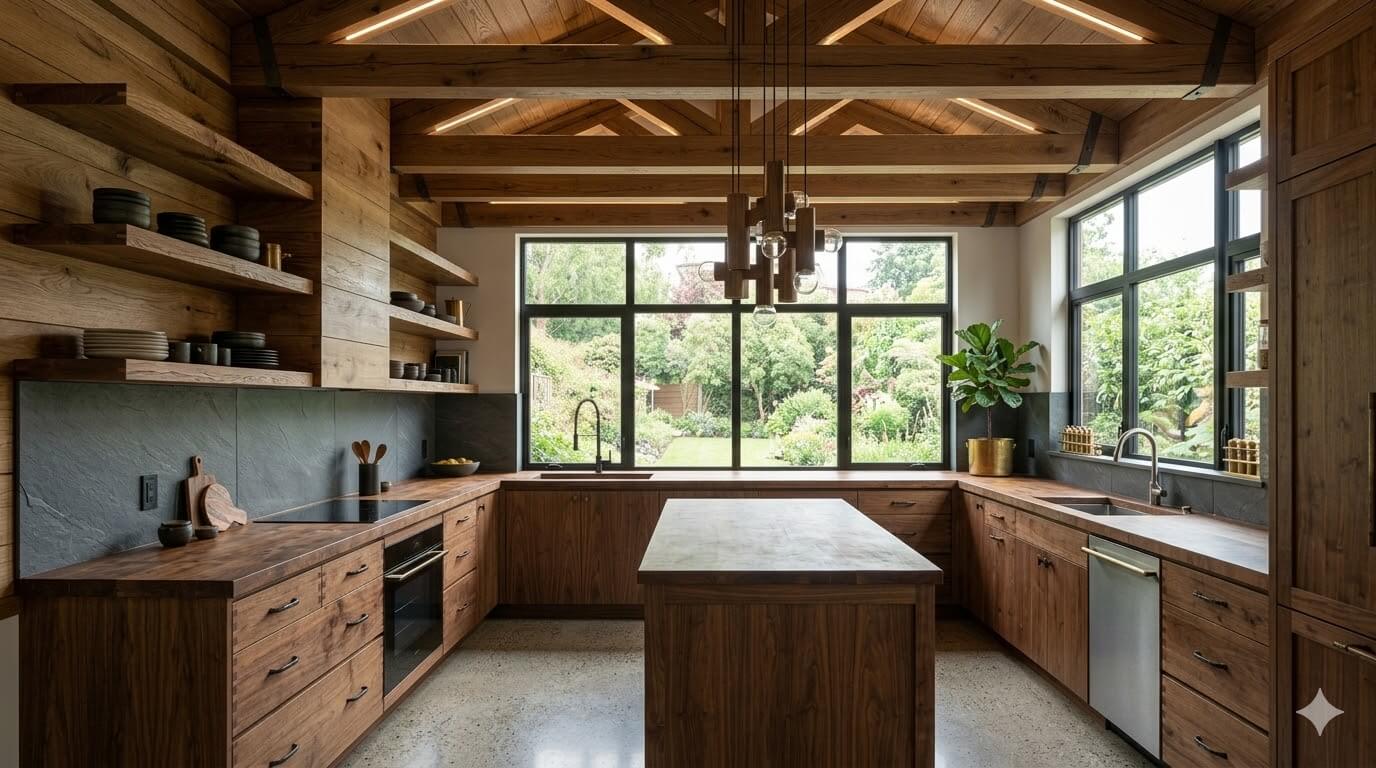
Solid wood brings a feeling that is hard to copy. Open a kitchen cabinet or a cupboard made from real wood, and you can see and feel the difference right away. The grain is never identical. Maple feels clean and calm, cherry slowly deepens in color, oak looks sturdy and traditional, and hickory gives off a bold, rustic character. Among all the interior design materials used in kitchens, solid wood feels the most personal.
In daily use, it holds up well. Doors are opened and closed constantly, yet solid wood can take the wear. Small scratches or dents are not permanent damage. They can be sanded, refinished, or even repainted years later. This makes long-term kitchen cabinet maintenance more forgiving than many people expect.
The main concern is moisture and cost. Wood naturally reacts to humidity, so proper sealing is essential. Without it, warping or cracking may occur over time. That is why solid wood is most often used for doors and face frames, where its beauty and durability matter most.
Plywood
Plywood rarely gets attention, but it is one of the most trusted materials in well-built kitchens. Made from thin layers of wood pressed together in alternating directions, it stays stable even when temperature and humidity change. Many professionals quietly agree that plywood is the best material for kitchen cabinets when it comes to structure.
In real kitchen conditions, plywood performs reliably. It resists moisture better than many wood products and holds screws firmly. This is especially important for drawers, hinges, and shelves carrying heavy pots and appliances. From a kitchen cabinet maintenance point of view, plywood means fewer alignment issues and longer-lasting cabinet boxes.
Quality still matters. High-grade plywood offers smooth surfaces and strong bonding, while lower grades may splinter or separate over time. Used correctly, plywood becomes the hidden strength of a kitchen, supporting everything without drawing attention to itself.
HDF (High-Density Fiberboard)
High-density fiberboard sits between solid wood and MDF in both feel and performance. It is compressed under high pressure, making it dense, hard, and very consistent. For kitchens with clean lines and modern finishes, HDF blends in naturally.
HDF stays stable in changing environments and provides a smooth, solid surface for paint or laminated finishes. Among all the interior design materials used for cabinets, it offers a good balance between strength and visual uniformity. It also resists dents better than MDF, which helps in busy households.
However, HDF is not designed for heavy structural loads. Screw-holding strength is limited, and once moisture enters the board, damage can occur. Because of this, it is best used for cabinet panels and decorative parts rather than cabinet boxes.
MDF (Medium-Density Fibreboard)
MDF has become a favorite choice for painted kitchens, and the reason is simple. Its surface is perfectly smooth. There is no grain to show through the paint, resulting in a clean, modern finish that feels intentional and refined.
From a cost perspective, MDF helps keep budgets under control. It is stable, easy to shape, and widely available. As long as it stays dry, kitchen cabinet maintenance remains straightforward. Doors stay flat, and finishes remain consistent.
The weakness lies in moisture and heat. MDF can swell quickly if water penetrates the surface, and damage is difficult to repair. It also does not hold screws as well as plywood. For this reason, MDF works best for painted cabinet doors, drawer fronts, and interior layers rather than structural cabinet parts.
Chipboard
Chipboard is made by compressing wood chips and sawdust with resin under heat. It is one of the most commonly used core materials in budget cabinetry. Its biggest advantage is price. Chipboard is lightweight, affordable, and uses recycled wood byproducts, which makes it attractive for cost-sensitive projects.
However, performance is limited. Chipboard has low structural strength and performs poorly in damp environments. Moisture can cause it to swell, weaken, or even crumble. Over time, shelves may sag under heavy loads. Because of this, chipboard is rarely used as a visible surface.
In kitchens, chipboard is most often used as an inner core. You will commonly find it beneath melamine or laminate finishes, or inside drawer boxes where direct moisture exposure is limited.
Melamine
Melamine is not a core material itself, but a resin-infused surface layer fused onto chipboard or MDF. It is widely used in modern and budget kitchens because of its clean look and predictable performance. Melamine panels come in a wide range of colors and wood-look patterns and remain stable even with humidity changes.
From a daily-use perspective, melamine is easy to clean and does not require special care. This makes kitchen cabinet maintenance simple. That said, the surface can chip or peel at the edges, and once damaged, repairs are difficult. Its weight can also lead to sagging over time if the cabinet construction is weak.
Laminate
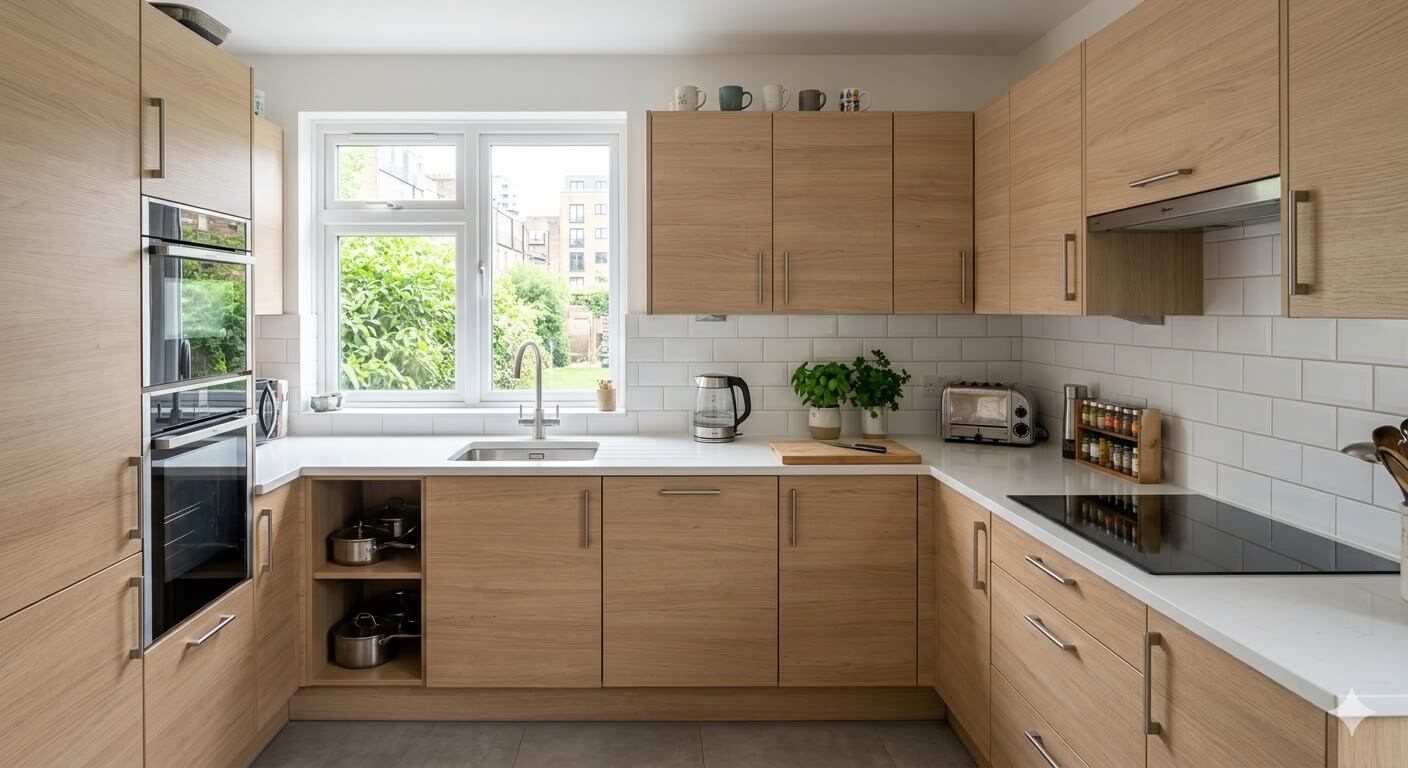
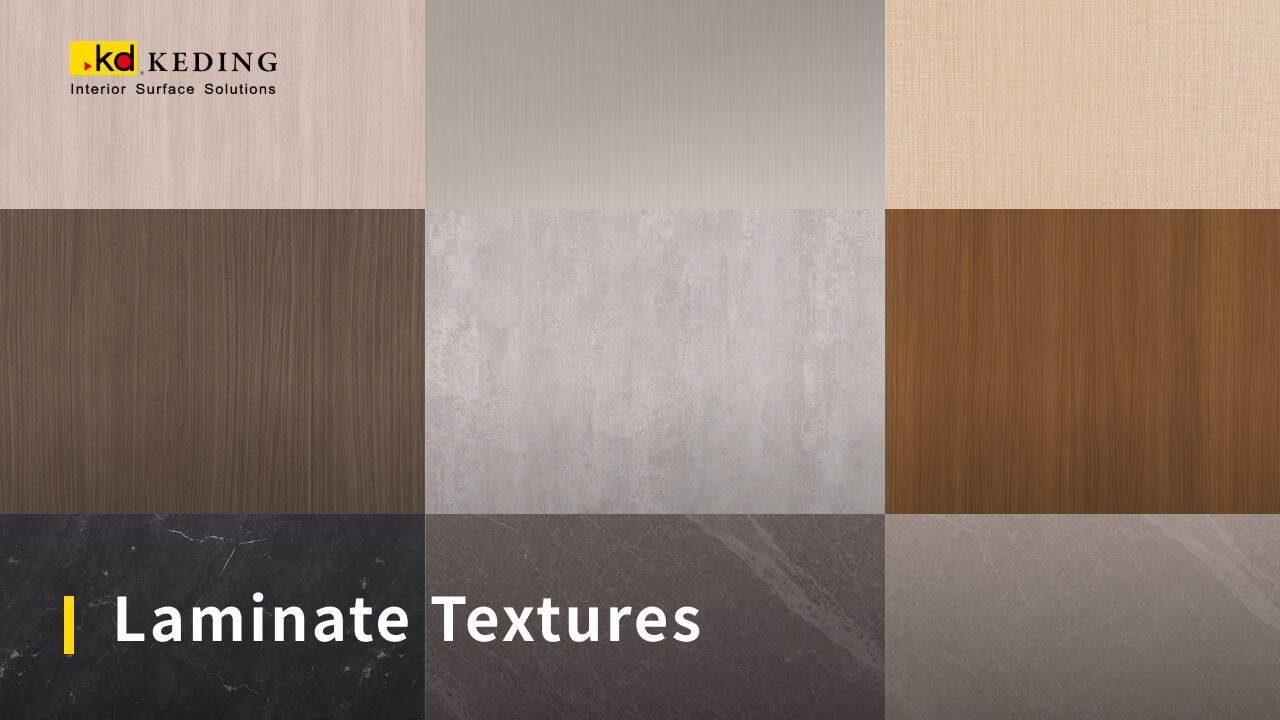
Laminate is made from multiple layers of paper and resin fused under heat and pressure, then bonded to a wood-based core. It offers a wide range of textures and finishes, providing greater design flexibility. There are many versions available, such as low-pressure (LPL) and high-pressure (HPL), with HPL offering significantly higher durability.
In real kitchens, laminate shines. It resists scratches, stains, heat, and moisture better than melamine or thermofoil. For busy households, it is often considered one of the best material options for kitchen cabinets from a durability standpoint. Cleaning is simple, and no special products are needed.
The trade-off is repairability. Once laminate chips or cracks, it cannot be refinished. Lower-quality laminates may also peel at the edges. Still, for modern kitchens that prioritize performance over tradition, laminate is a strong, low-maintenance choice.
Wood Veneer
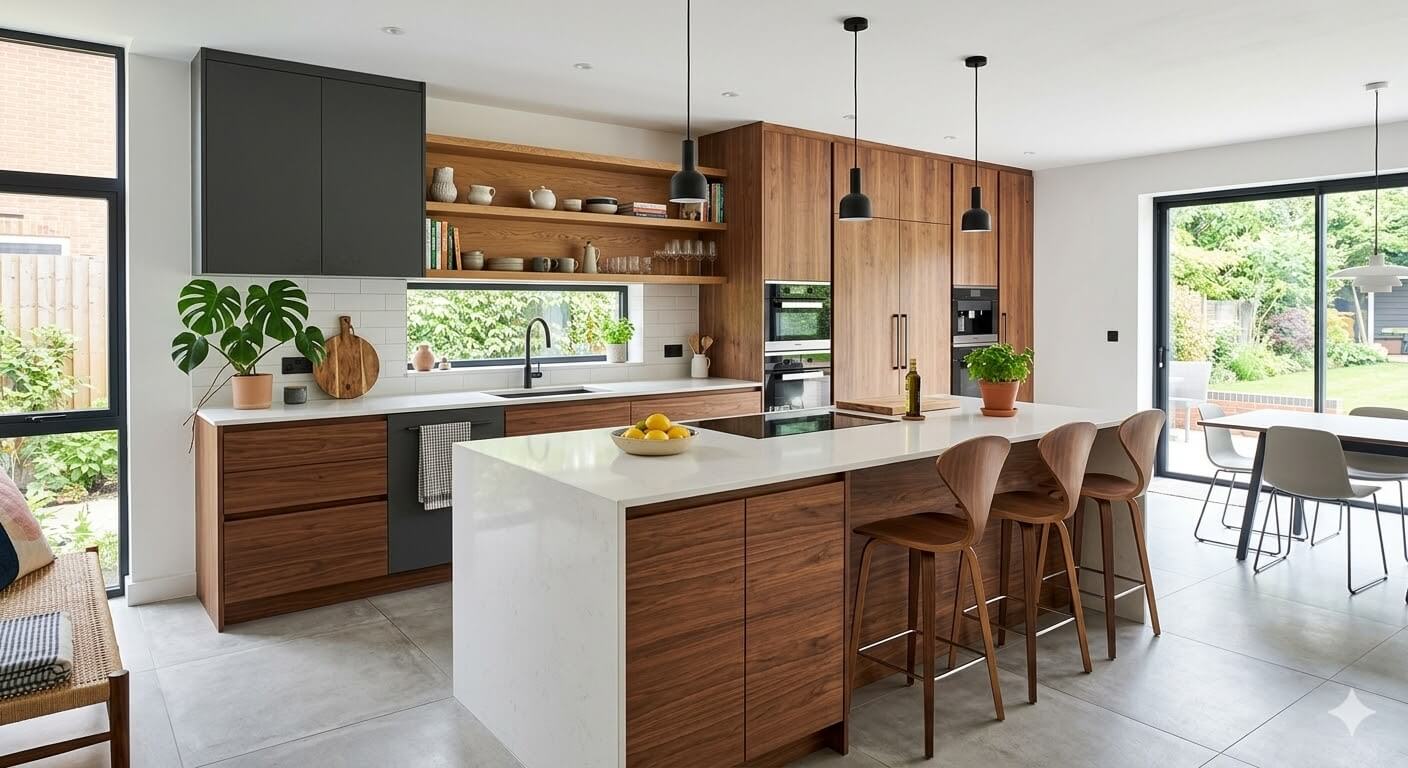
Wood veneer offers the look of real wood without the weight or cost of solid hardwood. A thin slice of natural wood is bonded to an engineered core, usually plywood or MDF. This combination provides visual warmth with improved stability.
Because of its engineered base, wood veneer resists warping better than solid wood. It feels more natural than plastic-based finishes, and small surface marks can sometimes be lightly buffed. Among all the interior design materials used for cabinetry, veneer strikes a balance between appearance and practicality.
Moisture remains the main concern. Prolonged exposure can cause bubbling or peeling. Veneer also cannot be sanded repeatedly like solid wood. It is best used for cabinet doors and visible panels where aesthetics matter most, paired with more durable materials underneath.
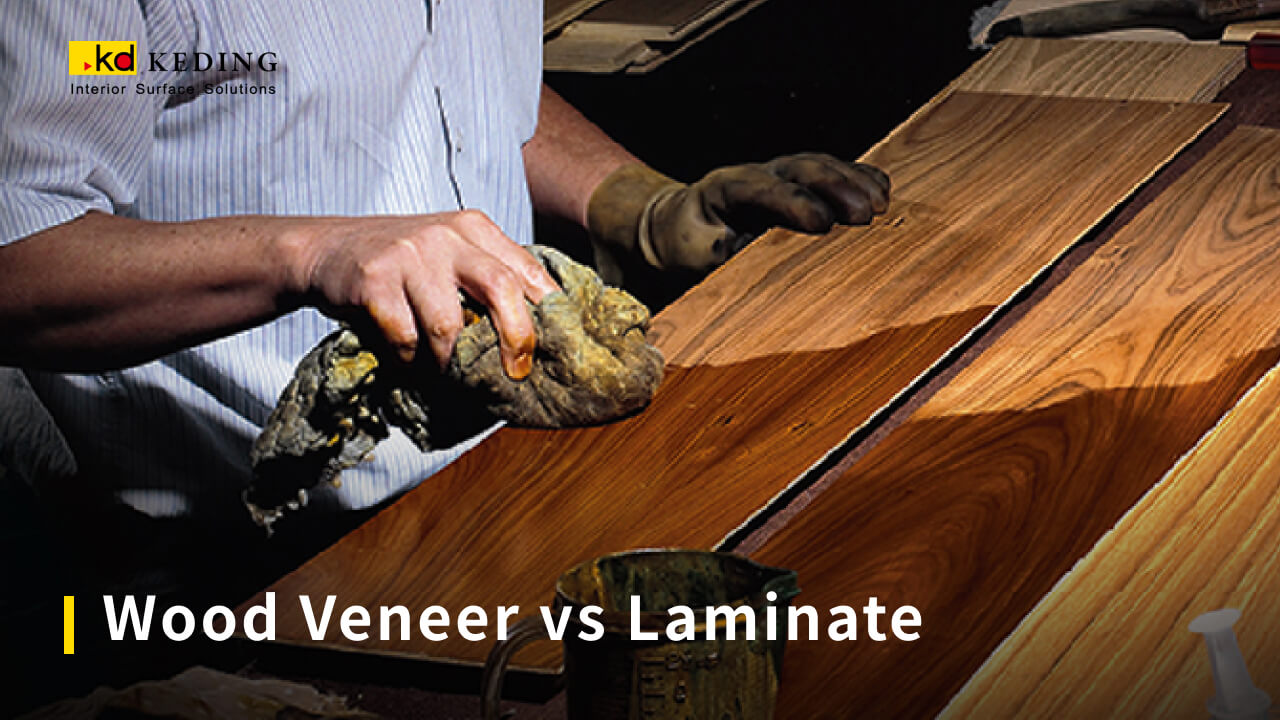
You may also be interested in knowing the difference between laminate and wood veneer.
Thermofoil
Thermofoil cabinets are created by heating a vinyl sheet and vacuum-pressing it onto an engineered wood core, usually MDF. The result is a smooth, seamless surface that closely resembles painted cabinetry, especially from a distance. For homeowners working within a tight budget, thermofoil offers a clean look without the cost of multi-layer paint finishes.
In everyday use, thermofoil performs well in dry, low-impact areas. It resists moisture, stains, and fading, and cleaning is as simple as wiping with a damp cloth. High-gloss finishes can also reflect light, making small kitchens feel brighter and more open.
Heat is its weak point. Exposure near ovens, cooktops, or dishwashers can cause the surface to peel or bubble. Scratches are also difficult to fix. Because of this, thermofoil is best used on upper cabinets or low-heat zones in modern kitchens.
PVC
PVC (Polyvinyl Chloride), often called polymer cabinet doors, is a lightweight plastic-based material used as a surface coating. It is popular in budget-conscious renovations because of its strong resistance to water and corrosion. In humid environments, this can be a major advantage.
From a maintenance standpoint, PVC is easy to live with. It does not absorb moisture, resists mold, and can be cleaned quickly. Modern manufacturing techniques allow PVC to mimic wood grain reasonably well, making it visually acceptable for many homeowners.
However, PVC does not feel as premium as wood or laminate. It scratches easily and is not highly heat-resistant. For kitchens, foam board PVC is generally preferred over hollow types, as it offers better strength and thermal stability.
Polyester
Polyester cabinets are made by combining pine fiber and melamine, then sealing the surface with a polyester film. This construction creates a finish that is smoother and more durable than standard melamine while remaining affordable.
In real kitchen conditions, polyester stands out for its scratch resistance. It handles daily use better than many budget materials and offers a wide range of colors and wood-look designs. For homeowners seeking a modern aesthetic without the cost of solid wood, polyester can be a practical compromise.
The downside appears when damage occurs. Once the surface is scratched or chipped, repairs are difficult and often noticeable. For this reason, polyester works best in contemporary kitchens where durability and appearance are valued, but full refinishing is not expected later.
Metal
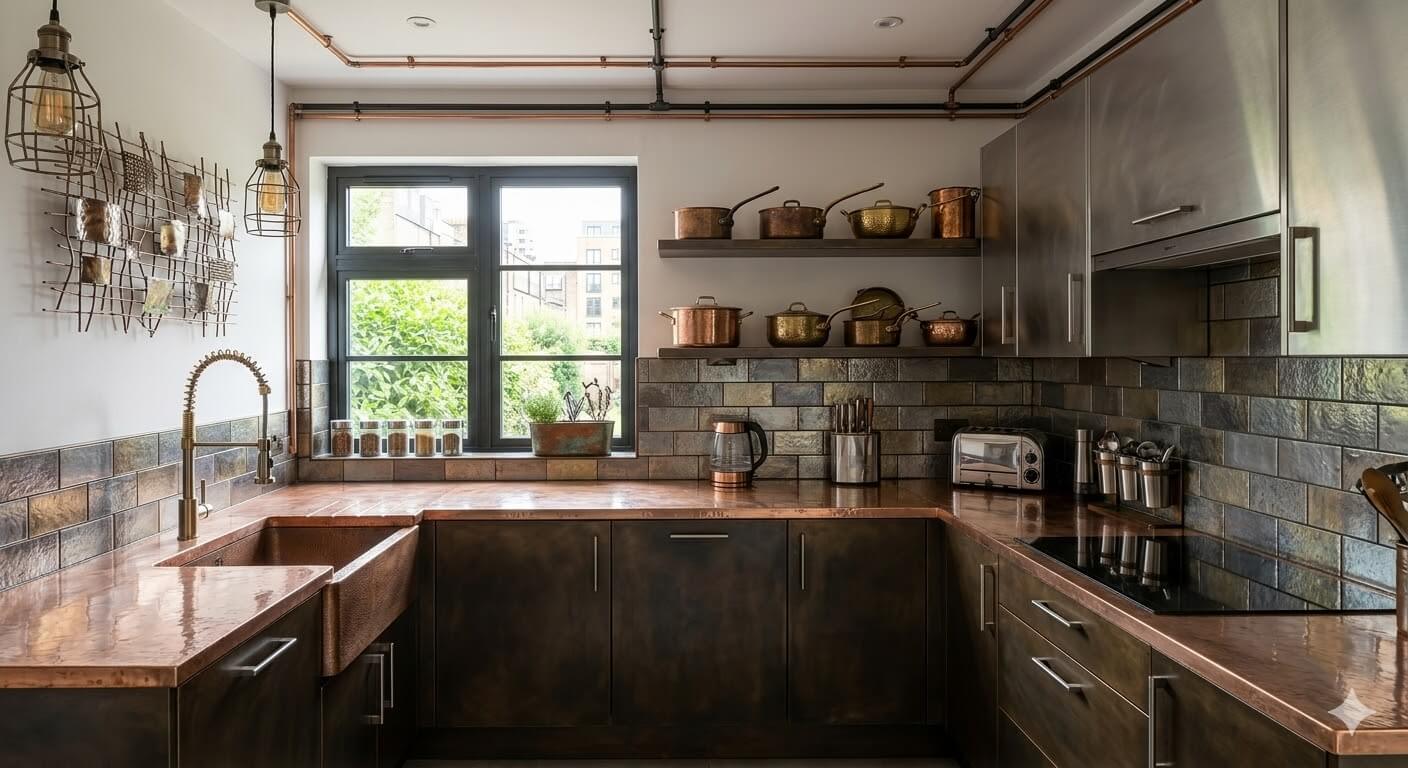
Metal cabinetry has moved beyond commercial kitchens and into modern homes. Stainless steel and aluminum bring a sleek, industrial look that emphasizes function and cleanliness. Among all the interior design materials used for cabinets, metal is the most durable.
Metal does not warp, absorb moisture, or react to heat. It is non-porous, hygienic, and highly resistant to bacteria and corrosion. This makes it ideal for high-use kitchens and areas near cooking zones.
The trade-offs are visual and tactile. Fingerprints, smudges, and water spots show easily. Dents can occur if heavy cookware hits the surface. Cost is also higher. Stainless steel suits professional-style kitchens, while aluminum offers a lighter, rust-free option for humid climates.
| Material | Features | Typical Use in the Kitchen | Pros | Cons |
| Solid Wood | Natural hardwood with visible grain | Cabinet doors, face frames | Durable, repairable, premium look | Expensive, humidity-sensitive |
| Plywood | Cross-layered wood veneers | Cabinet boxes, shelving, carcasses | Strong, moisture-resistant, holds screws well | Higher cost than MDF or chipboard |
| HDF | High-density engineered fiberboard | Door panels, decorative cabinet parts | Hard, smooth, stable for paint | Weak screw holding, water damage risk |
| MDF | Smooth, grain-free fiberboard | Painted cabinet doors, drawer fronts | Affordable, stable, paint-friendly | Swells with moisture, not repairable |
| Chipboard | Compressed wood particles | Cabinet cores, drawer boxes | Low cost, lightweight | Weak structure, poor moisture resistance |
| Melamine | Resin-coated board surface | Cabinet doors, interior cabinet panels | Easy to clean, stable, and budget-friendly | Chips easily, limited repair |
| Laminate (HPL/LPL) | Multi-layer resin surface | Cabinet doors, high-use cabinet faces | Scratch, heat, and moisture-resistant | Cannot be refinished |
| Wood Veneer | Thin real wood over engineered core | Cabinet doors, exposed cabinet panels | Real wood look, lighter than solid wood | Moisture-sensitive, limited refinishing |
| Thermofoil | Vinyl vacuum-pressed onto MDF | Upper cabinet doors, cabinet fronts | Seamless, moisture-resistant | Heat-sensitive, scratch-prone |
| PVC | Polymer-coated board | Cabinet doors in humid kitchens | Waterproof, corrosion-resistant | Less premium feel, scratch-prone |
| Polyester | Fiberboard with polyester film | Contemporary cabinet doors | Scratch-resistant, affordable | Difficult to repair |
| Metal (Stainless / Aluminum) | Non-porous metal panels | Full cabinet systems, cabinet doors | Heatproof, hygienic, durable | Fingerprints, dents, and a higher cost |
How to Choose the Right Kitchen Cabinets/Cupboard Materials
Selecting the right materials for kitchen cabinetry is a decision that carries real weight. The best choice is rarely about one single factor. It comes from balancing durability, appearance, kitchen cabinet maintenance, sustainability, budget, and the environment your kitchen lives in.
Durability
Durability sits at the core of cabinet quality. Kitchens are high-use spaces, and materials must survive daily opening, closing, heat, and impact. Solid wood is often seen as the gold standard. It is strong, long-lasting, and uniquely repairable. Scratches and dents can usually be sanded out, extending its lifespan for decades.
Plywood is widely considered the best material for cabinet boxes because its layered structure delivers strength without excessive weight and holds screws securely. For busy households, high-pressure laminate stands out for its resistance to scratches, heat, and impact. Metal, especially stainless steel, offers unmatched durability and hygiene, which is why it is common in commercial kitchens.
Aesthetics
Cabinet materials strongly influence the kitchen’s overall mood. Traditional and classic kitchens often rely on solid wood for its natural grain and warmth, using species like oak, cherry, or walnut.
Modern and contemporary kitchens lean toward stainless steel, glass, or high-gloss thermofoil to create clean lines and brighter spaces. Painted kitchens benefit from MDF, which provides a smooth, uniform surface that allows paint to look flawless without visible grain.
Maintenance
Maintenance requirements vary widely between natural and synthetic materials. Melamine, laminate, and MDF are low-maintenance options that clean easily with a damp cloth. Solid wood needs more care, including gentle cleaners and proper sealing to protect against moisture.
Stainless steel, while durable, shows fingerprints and smudges easily and requires frequent wiping. Thermofoil is easy to clean but sensitive to heat, making placement near ovens and dishwashers a key concern.
Cost
Cost often shapes final decisions. Melamine, particle board, and MDF sit at the budget-friendly end of the spectrum. Wood veneer and plywood fall into the mid-range, offering better performance and appearance without the cost of solid wood. Premium materials like solid hardwood, bamboo, and stainless steel demand higher investment but can deliver long-term value, especially when refinishing is possible.
Sustainability
Sustainability is becoming increasingly important. Particle board makes efficient use of recycled wood byproducts. Wood veneer reduces hardwood consumption by using thin slices over engineered cores. Newer options like panels made from recyclable materials address environmental concerns with reclaimed materials.
KD Panels is Your Best Material Choice for Kitchen Cabinets/Cupboards
When planning kitchen cabinetry that needs to look good and last, the panel material matters as much as the cabinet and cupboard structure itself. This is where Keding stands out. Known for eco-friendly, health-focused interior materials, we combine thoughtful R&D with sustainable manufacturing to create panels that suit everyday kitchen use.
TRUE⁺ Panels reflect our focus on refined craftsmanship, carefully selected materials, and consistent quality control. Designed with a full matte finish and precisely engineered textures, TRUE⁺ Panels capture the depth and warmth of natural materials while offering durability, safety, and easy maintenance. This makes them a flexible solution for both residential and commercial interiors.
Among the series, the PVC Series stands out for kitchen and moisture-prone environments. It offers strong resistance to moisture and water while maintaining a clean, modern appearance. This balance of performance and aesthetics makes it especially suitable for kitchen cabinets, cupboard doors, and areas where humidity and daily cleaning are part of everyday use.
Ready to explore how KD PVC Panels can elevate your kitchen? Contact us directly to request samples, view finishes, and download product catalogs, then bring your kitchen vision to life with materials built for beauty and performance.